It's Okay to Cry
When I was a boy, crying was discouraged, especially around your friends. It was the 1970s, and we weren’t as progressive as we are today.
Tears were only acceptable when:
We crashed our bikes. Helmets were not required back then. Had I worn one, I certainly would have been ridiculed. A possible concussion was better than looking uncool.
We fell off those oddly skinny skateboards and skinned our hands and knees. Nobody wore hand, knee, or head protection back then. Once again, tears were preferable to looking like a dork for wearing a helmet.
We got hit in the face with a baseball, a football, or a basketball. The caveat to this rule is that the ball couldn’t be Nerf. Tears caused by a Nerf anything would guarantee derision from your friends.
That’s it. Crying over anything else would cause the accusation of being “a baby.” If the tears didn’t stop quickly enough, the accusation grew to being “a big baby.”
Oh man, I hated that one.
***
As an adult, I admit crying is natural.
Tears arrive for joyous reasons. Because of several life changes, it took me nearly thirty years to earn my black belt in Kenpo Karate, a journey most folks will make in five to seven years. The moment my instructor tightened the new belt around my waist, I cried. I didn’t feel embarrassed by the display of my emotions.
Grief will also cause tears to arrive. I cried when my dad passed. I also cried when my best friend from high school passed at 42 years of age. I sobbed when I put down a beloved dog (Brisco) whose body was failing him.
There are other reasons for tears, of course. Pain, obviously. Loneliness. Relief. Anger. Hormones. Even manipulation. The list goes on.
***
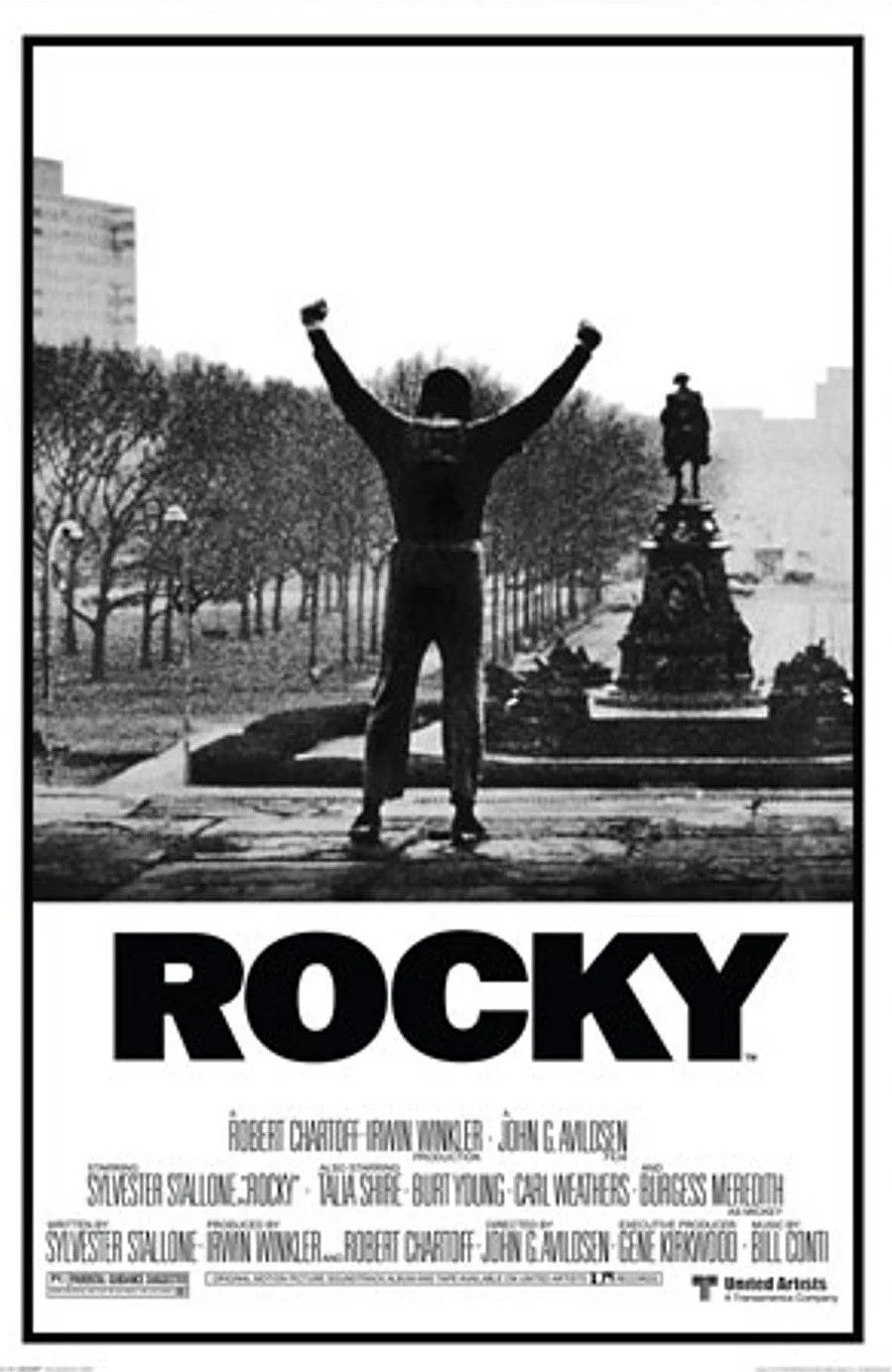
This weekend, I rewatched Rocky for the umpteenth time.
It’s my favorite movie, as I’ve mentioned before in this newsletter and on my blog. My dad took me to the theater when it came out. From the first time I saw the movie, I thought it a great film. However, it’s grown on me with each subsequent viewing.
Years ago, I would cry at the end because Rocky went fifteen rounds with Apollo Creed, something no other boxer had done. It was the goal he set for himself so no one would consider him a bum. It’s a message that resonated with my younger self. I wasn’t worried about being number one; I wanted to prove I accomplished one of my goals (whichever one and however audacious it may have been).
As I grew older, I stopped crying at that part and now get teary-eyed for different reasons.
I well up when Rocky reconciles with Mickey (his trainer) after yelling at him through his apartment door. I become misty-eyed when Rocky repeatedly yells, “Adrian,” when the fight is over. About ten years ago, I realized Rocky wasn’t a sports movie or a story about a guy reaching his goal. Instead, it was a love story (and the best one ever).
My chin trembles every time Ray Kinsella (Kevin Costner) gets to play catch with his dad at the end of Field of Dreams. I felt this way long before my dad and I played catch for the last time, shortly before he was diagnosed with dementia. We never played again.
It’s been years since I cried at the ending of Old Yeller. That’s because I haven’t watched it since I was a kid and bawled like a big baby. I keep thinking I should rewatch it, to see if it would have the same impact, then I think, “Nope. That messed me up way back when. I don’t need to put myself through that again.”
I’ve teared up while reading The Chocolate War and Don’t Stop the Carnival, two of my favorite books. The former is about taking a stand against life’s cruelty, while the latter is about the attainment of a dream not being what we hoped for.
***
Some folks have shared the emotions my books have caused them.
Many are touched by Dallas Nash’s grief following his wife’s death. They explained how his hurt resonated with them and reminded them of a lost loved one.
A few have shared how they were shaken after a major character died in The Only Death That Matters. One reader, a friend from my time on the police department, wrote to share how she was touched by a traumatic event in The Lesser Murder. Still another said he had nightmares after an officer-involved shooting was depicted in Badge Heavy.
My first goal with my books is to entertain. I want you to have a great time reading them and feel close to the characters. However, if my work impacts you beyond that, please know I don't take that lightly. I understand how powerful those moments are and how they can hang around (like Old Yeller).