Where were you 9/11/?
There are certain moments in life when we remember exactly where we were.
I was sitting in high school English class when the Space Shuttle Challenger exploded.
I was in Germany when the Berlin Wall fell.
On September 11, 2001, I was asleep.
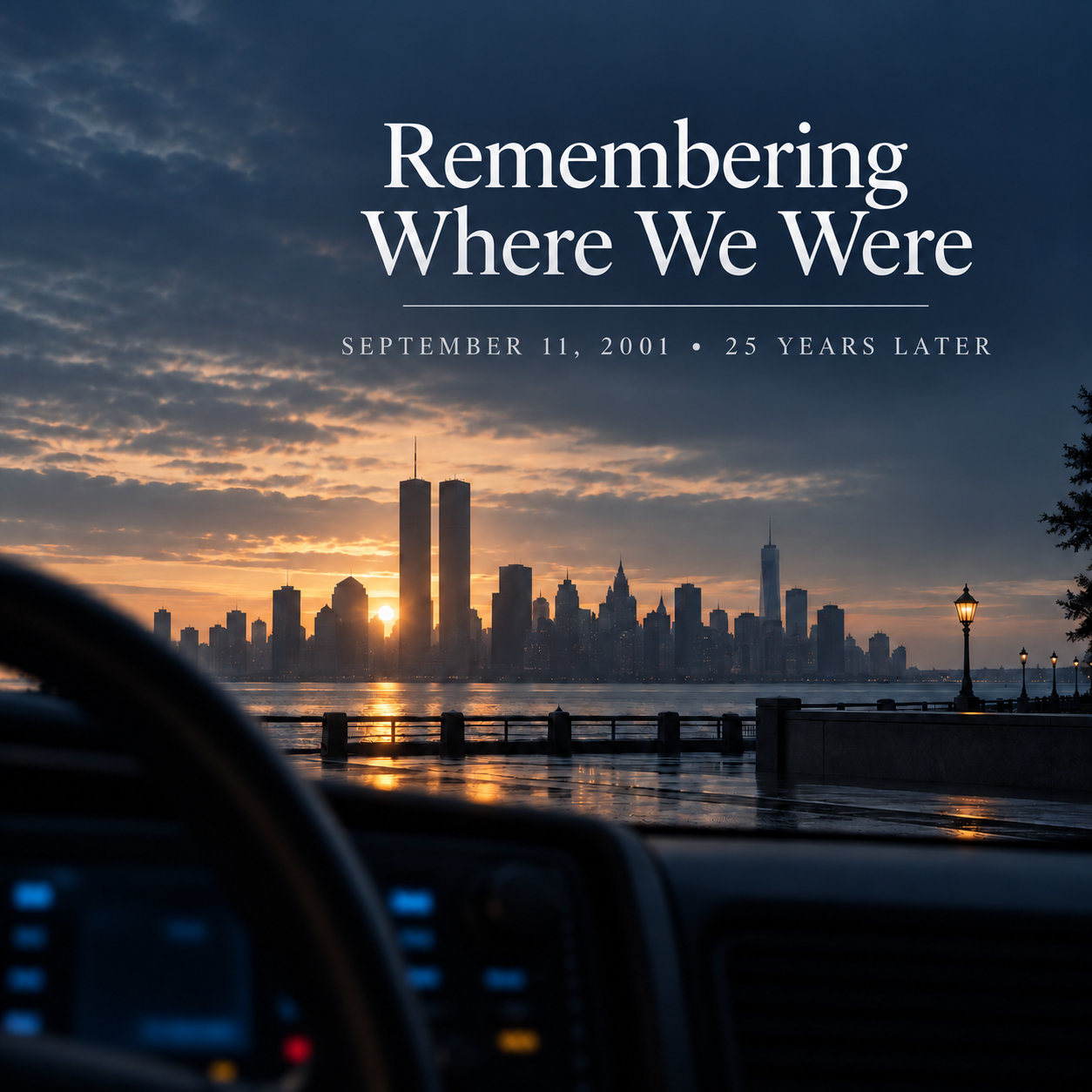
At the time, I was a patrol officer with the Spokane Police Department. I worked power shift, a 10-hour-and-40-minute sprint that covered the tail end of swing shift and the first half of graveyard.
Power shift was where the action was. We handled plenty of domestic violence calls, gang activity, bar fights, and whatever other trouble people could find late at night.
Because of my schedule, I often went to bed around four in the morning and woke around eleven, maybe even noon.
That was my routine on September 11.
I rolled out of bed around my usual time, shuffled into the kitchen, and made some coffee. I grabbed the newspaper from the front porch and settled onto the couch for what I expected to be a leisurely morning.
Then I turned on the television.
Coverage of the attacks filled every major channel. The videos of the planes hitting the World Trade Center and the towers collapsing played again and again.
I stared at the television, trying to make sense of what I was seeing.
Like everyone else, I couldn’t.
Roll call for a patrol team could be a boisterous experience.
Before the sergeant started the briefing, jokes flew around the room, often at another officer’s expense. Funny stories from the previous night’s activities were also shared. That kind of humor was a release valve for a job that could get serious very quickly.
Power-shift officers usually didn’t linger after roll call, either. We wanted to get onto the street and find some trouble. That night, the trouble was already known.
The United States had been attacked.
We didn’t know everything yet. Osama bin Laden’s name was already being discussed, but much of what had happened and what would come next remained unknown.
Roll call that evening was unlike any I remember.
Nobody told a joke. Nobody shared a funny story.
Officers sat around the table speaking quietly until the sergeant arrived. He went through the daily bulletin, then set his clipboard aside.
And we stayed there.
Normally, we’d be halfway to our patrol cars by then. That night, nobody seemed in much of a hurry to leave.
I think we were all trying to reconcile what had happened that morning.
None of us were doing a very good job of it.
Another officer, Dave, suggested we ride together that night. I gladly accepted.
A police radio usually provides a constant soundtrack to a patrol shift.
Traffic stops. Officers arriving at calls. License checks. Requests for backup. Dispatchers sending officers from one incident to another.
On a busy night, the chatter can become a symphony of chaos.
Our patrol cars also had Mobile Data Terminals, or MDTs. The small amber screens displayed waiting calls. During power shift, seeing the screen filled with lower-priority incidents wasn’t unusual.
September 11 was different.
The streets were nearly empty, so officers weren’t making any traffic stops.
People weren’t calling about barking dogs or noisy neighbors.
The MDT remained strangely blank.
Even domestic violence calls, which seemed capable of surviving every holiday and major sporting event, were nearly nonexistent.
It felt like everyone had gone inside, closed their doors, and sat in front of the television trying to comprehend what had happened.
The entire city seemed to have gone quiet.
Dave and I spent much of the shift talking. He was a nice guy with a great sense of humor, and we could usually make each other laugh.
I don’t remember laughing that night.
Dave was also a captain in the National Guard and expected that he might soon receive orders. He knew I’d previously served in the military and asked whether I’d ever considered joining the Guard. That’s a story for another day.
Mostly, we drove that night.
The radio remained quiet and the streets remained empty.
For once, two power-shift cops couldn’t find much trouble anywhere.
Twenty-five years later, that’s what I remember most about September 11.
The silence.
No jokes at roll call. No steady chatter on the radio. No screen filled with waiting calls. Almost nobody on the streets.
The world had changed that day, although none of us could possibly have known yet how much.
Maybe that’s why certain days remain so firmly planted in our memories.
Challenger. The Berlin Wall. September 11.
We remember where we were, who we were with, and sometimes even the smallest details surrounding the moment.
Most ordinary days eventually blend together, then there are the days that divide our lives into before and after.
This week marks twenty-five years since September 11, 2001.
If you’re old enough to remember that day, I’m guessing you still know exactly where you were when you heard the news.
I certainly do.